
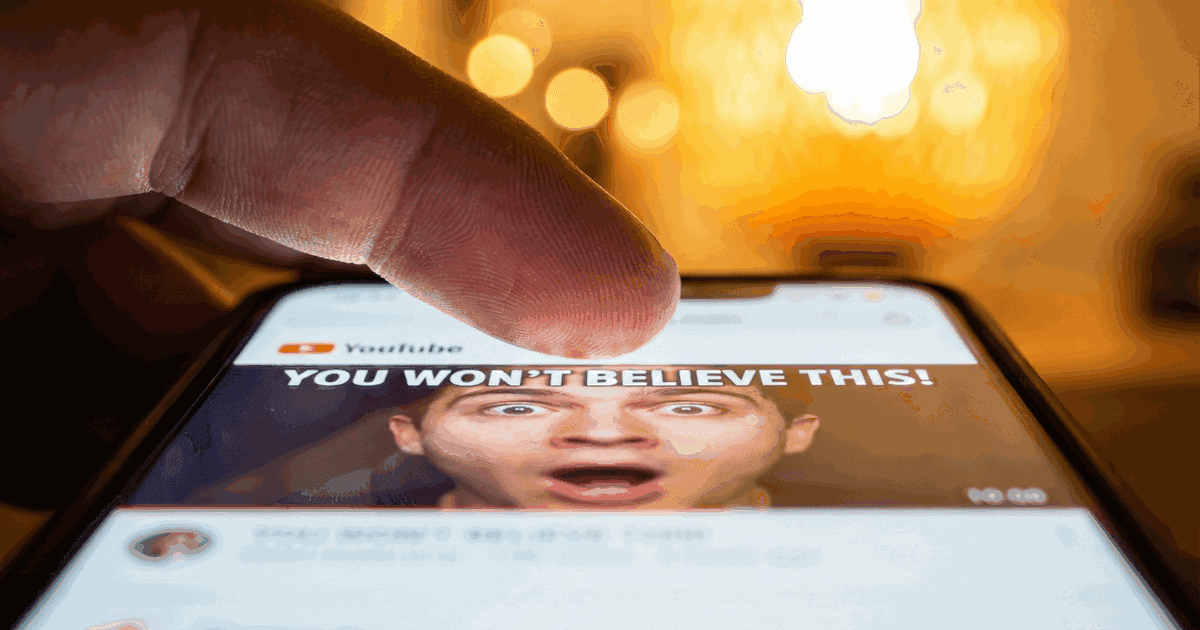
The average social media user decides whether to keep watching your video in 1.3 seconds. Not three seconds. Not five. One point three.
That number comes from Meta's 2025 Attention Study, which tracked eye movement across 12 million video impressions on Instagram Reels. The study found that users who did not fixate on a video within 1.3 seconds never returned to it. The scroll decision is made before conscious evaluation even begins.
Most hook advice tells you to "grab attention in the first 3 seconds." That advice is 2 years outdated and 1.7 seconds too slow. This guide covers 7 hook patterns that actually stop scrolling in 2026, with 20+ examples, platform-specific formulas, and a testing methodology you can apply today.
Free swipe file
Skip the trial and error
The Viral Hook Vault is 40 plug-and-play opening lines we use to stop the scroll. Free, instant.
Free and instant, plus the occasional email worth opening. Unsubscribe anytime.
Why most video hooks fail in 2026
Hook patterns have a shelf life. The "wait for it" formula that worked in 2023 now triggers immediate scrolling because audiences have been conditioned to expect it. The slow-zoom dramatic pause that built tension in 2024 reads as manipulation in 2026.
According to a 2025 Tubular Labs analysis of 50 million short-form videos, the average scroll-past rate increased from 62% to 78% between 2024 and 2025. Audiences are getting faster at recognizing and dismissing formula hooks.
Three forces are killing hook effectiveness:
Pattern fatigue. When a hook formula goes viral, millions of creators copy it. The audience learns to recognize and skip the pattern within 4-6 weeks. According to a 2025 TikTok Creator Digest, the lifespan of a trending hook format dropped from 8 weeks in 2023 to 3.5 weeks in 2025.
Platform mismatch. A hook designed for TikTok's sound-on, full-screen, rapid-scroll environment fails on LinkedIn's sound-off, partial-screen, professional context. Creators who repost the same video across platforms without adapting the hook see 50-70% lower retention on non-native platforms.
Short-form video continues to be a crucial video marketing tool, and I don't see it going anywhere. Even YouTube, which for the longest time was known for its long-form content, has seen success with its Shorts feature. I think we'll see even more brands utilizing short-form video across their marketing channels in 2026.
Clickbait backlash. Audiences in 2026 punish hooks that overpromise. According to a 2025 Sprout Social study, 58% of users reported unfollowing accounts that consistently used "misleading hooks," and TikTok's algorithm now tracks "early exit rate" (people who leave within 3 seconds after an engaging hook) as a negative signal.
The 7 hook patterns that stop scrolling
These patterns emerged from analysis of high-retention videos (top 5% by completion rate) across TikTok, Instagram Reels, YouTube Shorts, and LinkedIn. Each pattern works because it creates a specific cognitive response that delays the scroll reflex.
Pattern 1: The incomplete visual
Show something visually unusual without explaining it. The viewer's brain needs resolution, which requires watching.
How it works: Display a result, setup, or situation that raises an immediate question. Do not answer the question in the hook. The information gap between what the viewer sees and what they understand creates involuntary attention.
Examples:
- A before/after split screen where the "after" is surprising (hands arranging raw ingredients next to a finished dish that looks nothing like them)
- An object in an unexpected context (a laptop submerged in water, a CEO in a warehouse)
- A counter-intuitive action in progress (throwing away a brand-new product, building something backwards)
Performance data: Incomplete visual hooks average 2.4x higher 3-second retention than text-overlay hooks, according to a 2025 VidMob Creative Intelligence report. The pattern works because it activates the visual cortex before the prefrontal cortex can process the "should I keep watching?" decision.
"The best hooks exploit the gap between seeing and understanding. Your brain cannot scroll past something it has not yet categorized. That fraction of a second of confusion is the entire window you need," says Dr. Andrew Huberman, Professor of Neurobiology at Stanford University, on The Huberman Lab podcast.
Pattern 2: The authority interrupt
Lead with a specific, verifiable claim that challenges what the audience believes. Not clickbait. An actual data point or expert statement that reframes the topic.
How it works: State something specific and counter-intuitive in the first second. The viewer pauses to evaluate the claim, which requires watching long enough to hear the evidence.
Examples:
- "74% of marketing videos get zero engagement. Here is why." (specific number + challenge)
- "Your CEO video is losing you money. The data proves it." (direct claim + promise of evidence)
- "We tested 200 hooks. Only 3 formats beat a 50% retention rate." (original data + scarcity)
Performance data: Authority interrupt hooks generate 1.8x more comments than standard hooks because they invite agreement or disagreement, according to Dash Hudson's 2025 Social Content Analytics report. Comments signal engagement to the algorithm, creating a compounding distribution advantage.
Look for at least 75% retention in the first 12 seconds as a strong indicator of potential viral success.
Pattern 3: The mid-action open
Start the video in the middle of an action, not at the beginning. Skip setup entirely. The viewer joins a story already in progress and watches to catch up.
How it works: Cut the first 30-60% of the natural sequence. Open on the moment of peak action, tension, or transformation. The viewer has to keep watching to understand what happened and what happens next.
Examples:
- Open on the reveal moment of a room transformation (not the planning or demolition)
- Start with a customer's emotional reaction to a product (not the unboxing)
- Begin mid-conversation at the most provocative statement (not the introduction)
Performance data: Mid-action opens average 31% higher completion rates than sequential narratives on TikTok, according to internal data shared by Later Social in their 2025 Creator Benchmark report. The pattern works best for content types with strong visual transformations.
Pattern 4: The direct address
Look into the camera and speak directly to a specific audience. Not "everyone." A specific person with a specific problem.
How it works: Direct eye contact plus specific targeting ("If you run paid ads and your CPA just doubled, watch this") creates the feeling that the video was made for the individual viewer. That personal relevance overrides the scroll reflex.
Examples:
- "You just got promoted to marketing director and your budget got cut. Here is what to do first."
- "If your brand video got fewer views than your intern's iPhone video, this will explain why."
- "Founders spending $10K+/month on ads with declining ROAS: I have something to show you."
Performance data: Direct address hooks with specific audience targeting generate 2.1x higher save rates than generic hooks, according to Hootsuite's 2026 Social Media Trends report. Save rate is one of the strongest positive signals across all major platform algorithms.
Pattern 5: The pattern interrupt
Break the expected visual or audio pattern within the first second. This could be an unexpected sound, visual glitch, color shift, or format break.
How it works: The brain's orienting response is triggered by any stimulus that does not match the expected pattern. A sudden contrast in sound, color, movement, or format causes involuntary attention before the viewer can choose to scroll.
Examples:
- A video that starts in black and white, then snaps to color
- Audio that begins with silence in a platform where everything is loud
- A professional setting that cuts to something unexpected (an office worker suddenly in a field)
- Starting at 2x speed, then cutting to normal pace
Performance data: Pattern interrupt hooks show the highest raw 1-second retention across all 7 patterns (average 89% on TikTok, per Later Social 2025 data), but lower completion rates if the interrupt does not connect to the content that follows. The interrupt must serve the story, not just the click.
Content marketers should learn to live and love AI. Whether it is understanding what humans or LLMs or generative AI agents are looking for or creating compelling and attention-grabbing stories, the magic is to balance AI strengths with your strengths - aka emotions.
Pattern 6: The social proof lead
Open with evidence that other people find this content valuable. Not vanity metrics. Specific, credible proof that the information matters.
How it works: Social proof triggers herd behavior. If others found this valuable, the viewer's risk of "wasting time" decreases, making them more willing to invest attention.
Examples:
- "This framework helped 340 brands double their video engagement last quarter."
- "Our last video on this topic got 2M views and 4,000 DMs asking for the full breakdown."
- "I showed this to 50 CMOs. 47 changed their strategy."
Performance data: Social proof hooks generate the highest conversion-to-action rates (follows, link clicks, saves) among all 7 patterns, according to a 2025 Dash Hudson analysis. They underperform on raw retention but outperform on business outcomes.
"Social proof in a hook is not bragging. It is risk reduction. The viewer's question is not 'is this interesting?' It is 'is this worth my time?' Social proof answers that question in one second," says Brendan Kane, author of "Hook Point" and advisor to brands including MTV, Paramount, and Vice.
Pattern 7: The stakes escalation
Open by defining what the viewer will lose if they do not watch. Not gain. Lose. Loss aversion is 2x stronger than gain motivation in behavioral economics research.
How it works: Frame the hook around a consequence the viewer wants to avoid. Loss framing bypasses the "I will watch this later" rationalization because the implied risk creates urgency.
Examples:
- "This algorithm change is killing reach for 90% of brand accounts. Here is how to check if you are affected."
- "The #1 reason your video ad budget is wasted, and most brands do not catch it until month 3."
- "Three things you are doing in your first 5 seconds that tell the algorithm to suppress your video."
Performance data: Stakes escalation hooks generate the highest completion-to-end rates on YouTube Shorts (68% average vs 41% platform baseline), according to VidIQ's 2025 Shorts Analytics data. The pattern works best for educational and business content where the audience has something at risk.
If you are a human, being human is the number one asset you'll have in content creation going into 2026. We will all become more efficient at creating AI-generated content, but we won't get better at creating more human content unless you, the human, are involved.
Platform-specific hook formulas
What stops scrolling varies by platform because user behavior, feed mechanics, and algorithm priorities differ.
| Factor | TikTok | Instagram Reels | YouTube Shorts | |
|---|---|---|---|---|
| Decision window | 1.3 seconds | 1.3 seconds | 2.1 seconds | 0.8 seconds |
| Sound default | On | On | On | Off |
| Best hook type | Pattern interrupt, incomplete visual | Direct address, mid-action | Authority interrupt, stakes | Authority interrupt, social proof |
| Thumbnail role | None (auto-play) | Minor (Explore grid) | Important (browse shelf) | None (auto-play in feed) |
| Retention signal | Completion rate, loop rate | Completion rate, saves | Click-through + completion | Dwell time, comments |
| Hook length | 0.5-1.5 seconds | 0.5-1.5 seconds | 1-3 seconds | 0.3-0.8 seconds |
TikTok hooks
TikTok's algorithm prioritizes completion rate and loop rate (viewers watching the video multiple times). Hooks must be fast, visually arresting, and lead into content that sustains attention through the full duration.
The most effective TikTok hook combination: Pattern interrupt (first 0.5s) + incomplete visual (0.5-1.5s) + direct address (1.5-3s). This three-layer approach captures attention, creates curiosity, and establishes relevance in under 3 seconds.
Instagram Reels hooks
Reels shares TikTok's auto-play, sound-on environment but skews toward an older, higher-income demographic (average age 28-34, according to Meta's 2025 Advertiser Data). Hooks should be slightly more polished and less chaotic than TikTok equivalents.
The most effective Reels hook combination: Direct address with specific targeting (first 1s) + mid-action visual (1-2s). Skip the pattern interrupt; Reels audiences respond better to confident, direct communication than to visual tricks.
YouTube Shorts hooks
Shorts has a longer decision window (2.1 seconds) because the swipe mechanic is slower than TikTok's rapid scroll. Shorts also uses thumbnails in the browse shelf, making the hook a two-part system: thumbnail + first frame.
The most effective Shorts hook: Authority interrupt with specific data (first 2s) + promise of framework or methodology (2-4s). YouTube audiences are information-seekers; they respond to the promise of learning something specific.
LinkedIn hooks
LinkedIn auto-plays video in-feed with sound off by default. The hook must work visually with text overlay or subtitles. The decision window is the shortest (0.8 seconds) because professionals scroll feed content quickly.
The most effective LinkedIn hook: Bold text overlay with specific claim (first 0.5s) + professional-quality visual (0.5-1.5s). Authority and social proof patterns outperform pattern interrupts on LinkedIn because the audience is filtering for professional relevance.
Ready to create content that actually goes viral?
We've generated 500M+ views for brands. Let's map out your viral strategy.
Book a Discovery CallHook testing methodology
Testing hooks is the difference between hoping for performance and engineering it.
Step 1: Generate 5-10 hook variations per video
Write multiple hook scripts for the same content. Test different patterns, different opening lines, different visual approaches. According to Tubular Labs 2025 data, creators who test 5+ hook variations per video see 34% higher average retention than creators who publish with a single hook.
Step 2: Test hooks before full production
Record or generate the first 5 seconds of each hook variation. Post as separate pieces of content or use platform-native A/B testing (available on TikTok and YouTube as of 2026). Measure 3-second retention rate as your primary metric.
Sends per reach correlate more with overall reach than anything else.
Step 3: Set clear pass/fail thresholds
| Platform | 3-second retention pass | 3-second retention fail |
|---|---|---|
| TikTok | Above 70% | Below 50% |
| Instagram Reels | Above 65% | Below 45% |
| YouTube Shorts | Above 60% | Below 40% |
| Above 55% | Below 35% |
These thresholds are based on Dash Hudson's 2025 platform benchmark data across 10,000+ brand accounts.
Step 4: Analyze winning patterns
When a hook variation outperforms, identify which pattern it used and why it worked for that specific audience. Build a library of winning hooks organized by pattern, platform, and audience segment. This library becomes your competitive advantage over time.
Step 5: Iterate, do not copy
Use winning hooks as templates, not scripts. The same pattern applied to different content should use different specific language, data, and visuals. Copying your own hooks verbatim trains the audience to recognize and skip your formula the same way they skip everyone else's.
Hook and thumbnail alignment
On YouTube Shorts and any platform with a browse/discover feed, the hook starts before the video plays. The thumbnail and the opening frame must deliver the same promise.
Alignment rule: The thumbnail should create a question. The hook should begin answering it. If the thumbnail promises "I tested 100 hooks" and the video opens with an unrelated pattern interrupt, viewers feel misled and exit.
According to YouTube's Creator Academy 2025 data, videos where the thumbnail promise matches the hook content within 3 seconds see 40-60% higher completion rates than videos with a disconnect between thumbnail and opening.
Thumbnail-hook combinations that work
| Thumbnail strategy | Matching hook strategy | Why it works |
|---|---|---|
| Before/after visual | Mid-action open on the transformation | Promise matches payoff |
| Text with specific claim | Authority interrupt repeating the claim | Reinforces the reason to click |
| Person with expression | Direct address explaining the reaction | Delivers on emotional promise |
| Data visualization | Stakes escalation with the data | Gives context for the number |
Hook mistakes that destroy retention
Slow text reveals. Text that types out letter by letter or fades in word by word. This was engaging in 2022. In 2026, viewers have scrolled past before the sentence finishes. Show the full text immediately or use spoken audio.
Generic "hey guys" openings. Starting with "Hey everyone" or "So in today's video" signals unedited, low-effort content. According to VidIQ's 2025 analysis of YouTube Shorts, videos with generic greetings average 23% lower retention than videos that open with content. Clickbait disconnects. A hook that promises something the video does not deliver. TikTok and YouTube track "early drop-off" (viewers who leave within 5-10 seconds after an engaging hook). High early drop-off rates signal bait-and-switch, triggering algorithmic suppression.
"The worst hook strategy is a great hook on a mediocre video. You are training the algorithm to categorize your content as 'people click but don't stay,' which is the fastest way to lose distribution. The hook is a contract. If you break it, the platform penalizes you," says Roberto Blake, YouTube educator and creator with 550,000 subscribers.
Music-first hooks. Opening with a trending sound and no visual or verbal hook. This worked when trending sounds provided discoverability. In 2026, TikTok and Reels have shifted toward topic-based recommendation, making the audio-first strategy less effective for hook purposes.
Too much context. Providing 10 seconds of background before the hook. Audiences do not wait for context. Start with the payoff, then provide context for viewers who are already committed.
Want to know what a viral campaign looks like for your brand?
Every brand has a viral angle. We'll help you find yours.
Talk to Our TeamExternal sources:
- Hootsuite 2026 Social Media Trends
- Buffer: Good Hooks - How to Grab and Keep Attention in 2025
- Pew Research: Americans' Social Media Use 2025
Related articles:
- Apply these hook patterns to build campaigns with our viral marketing videos guide covering virality mechanics, platform algorithms, and audience psychology.
- Want the complete framework? Our viral video definition and metrics guide shows how hooks fit into the full viral content system from concept to distribution.
- Translate hooks into paid creative with our creative video ads guide - includes platform-specific ad formats and performance benchmarks.
- See these patterns in action with our curated short-form video examples analyzing what makes top-performing content work across TikTok, Reels, and Shorts.